
Cruise never planned to make its possess silicon. But in the quest to commercialize robotaxis — and make cash executing it — all those by no means prepared pursuits can quickly feel a good deal more interesting.
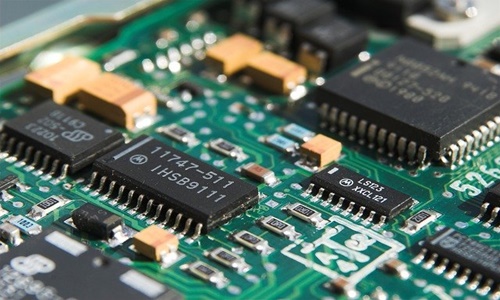
Cruise understood that the rate of chips from suppliers was much too high, the elements have been too significant and the reliability of the 3rd-bash know-how just wasn’t there, Carl Jenkins, Cruise’s vice president of hardware, informed TechCrunch for the duration of a tour of the company’s hardware lab last month.
Amid a hiring spree that started in 2019 and ongoing into 2020, Cruise doubled down on its very own components, which includes its individual board and sensors. The expense has helped the enterprise acquire scaled-down, decreased price tag hardware for its cars. It has also resulted in its first generation board the C5, which is powering the current era of autonomous Chevy Bolts.
When the company’s function-developed Origin robotaxi begins hitting the streets in 2023, it will be outfitted with the C6 board. That board will ultimately be changed with the C7 which will have Cruise’s Dune chip. Dune will approach all of the sensor details for the technique, according to Cruise.
Ordinarily, automakers use areas and sensors from Tier 1 suppliers in get to lessen R&D and manufacturing charges. Cruise couldn’t see a way to start its autonomous experience-hailing without doing much more of the get the job done by itself. The outcome is that the C7 board is 90% less costly, has a 70% reduction in mass, and takes advantage of 60% a lot less electric power than chips delivered by a provider.
It is not just chips that are staying taken care of by the corporation. Whilst long-assortment lidars and ultrasonic sensors are continue to sourced from 3rd events, approximately every thing else, including cameras, short-range lidar, and radar, are also remaining produced in-residence.
Cruise located that off-the-shelf radar just did not have the resolution they needed for their vehicles to work. Like the board, there is a extensive-term value reduction of about 90%, in accordance to Jenkins.
“I was informed the rate stage I have to meet this hardware for 2025,” Jenkins said. “So I went to all the CTOs of Bosch, Continental and ZF more than in Germany. ‘What do you have in your analysis tanks that you are performing that satisfies this?’ Absolutely nothing, not even started off. ‘Okay, if you start nowadays, how very long ought to I just take?’ 7 several years.”
At that stage, Jenkins was capable to improve his 20-individual workforce to 550.
When questioned about the fees of developing the Origin with in-house produced components versus pieces sourced from suppliers, CEO Kyle Vogt informed TechCrunch, “we couldn’t do it. It does not exist.”
That’s not to say that Cruise doesn’t want to be able to purchase the components it requirements, nevertheless.
“What we located in the AV business is a large amount of the elements that have the robustness essential to operate in a severe automotive surroundings, did not have the capabilities needed for an AV. The factors that did have the (AV) abilities wanted weren’t able of operating in those people harsh environments,” Vogt stated.
Created at Cruise, made use of at GM?
Automakers (not counting Tesla) have taken a far more cautious solution to autonomous autos that would be marketed to buyers. The technological know-how developed and proven out by Cruise could inevitably make its way into a GM solution offered to a customer.
And there is reason to imagine it will.
GM CEO and Chairman Mary Barra has repeatedly stated that the automaker will make and sell own autonomous vehicles by mid-10 years.
“We use Cruise as a bellwether for us for autonomous auto know-how and the stack and how it operates,” GM president Mark Reuss instructed TechCrunch editor Kirsten Korosec in a latest interview. As Cruise develops its AV tech, its father or mother business has centered its attempts on advanced driver support devices Super Cruise and now Extremely Cruise.
“When we start studying and wanting at individual autonomous cars there are choices like does the vehicle have pedals or does it have pedals that are deployable or does it not have pedals at all,” Reuss mentioned. “And so we’re seeking at what men and women want and all those aren’t quick concerns to reply.”
Just a handful of many years shy of its mid-decade aim, GM even now has to appreciable function to do, including its go-to-current market tactic for these personal autonomous motor vehicles (or as Reuss calls them, PAVs). The suggestions from its current InnerSpace autonomous strategy for Cadillac
GM hasn’t made a decision whether these PAVs will start as an up-market place product or service or whether or not it will be connected to an existing car or truck design or a focused car, Ruess additional.
Bumps in the highway
Impression Credits: Roberto Baldwin
Cruise at the moment runs an autonomous ride-hailing business enterprise in San Francisco but only throughout the center of the night time (10 p.m. until eventually 5:30 a.m.) and only in just 30% of the town. The corporation notes that this final decision was based mostly far more on making absolutely sure its motor vehicles work in the course of much less busy website traffic occasions. It is currently working to broaden all those space and time constraints.
It is not just San Francisco that will see much more driverless Chevy Bolts ferrying travellers close to. Cruise plans to increase to Phoenix, Arizona and Austin, Texas in the upcoming 90 times.
Scaling is Cruise’s subsequent chapter. Nevertheless, the hiccups hold coming. There have been numerous stories of Cruise robotaxis blocking intersections and other issues.
A single motor vehicle was included in a collision at an intersection which prompted the organization to update the software on 80 of its automobiles. In April of this 12 months, a Bolt was pulled more than for not acquiring its headlights on and at 1 place pulled away from the law enforcement officer. And of program, there is the notorious group of in excess of a half dozen Cruise Bolts that have been assembled at an intersection and not able to identify exactly where to go future creating targeted traffic problems.
When asked about the bunching up of the vehicles, Vogt pointed out, “This is element of functioning, parting of scaling. It’s a regular bump in the road.” The CEO observed that it was an inconvenience and not a basic safety problem. Vogt reported that AVs have a lot of again-finish companies and a person of them “flipped” and didn’t appear back again online speedily plenty of. How they all ended up in the similar intersection is that at the time there was only 1 start location for the autos and they had been cruising alongside 1 of their most important corridors close to that start locale. Since then Cruise has incorporated resiliency techniques in the AVs to make them extra tolerant.
The organization (and by extension, Vogt) is self-assured in its in-dwelling constructed autonomous ride-hailing program. Now it wants to influence skeptics that a ride in a motor vehicle without the need of a driver is worthy of having to pay for in towns exterior tech-helpful San Francisco.
Our driverless journey
At the stop of the tour, Cruise established us up with an autonomous journey in a Bolt.
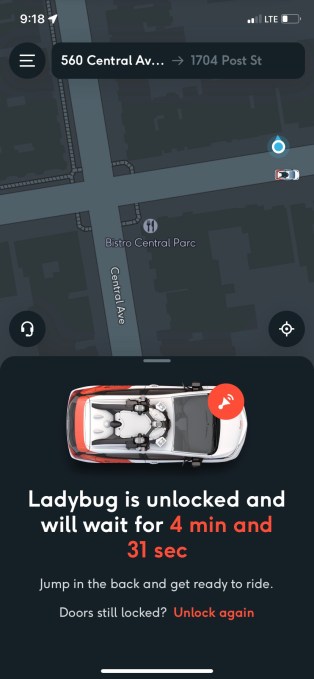
Our auto, dubbed Ladybug, arrived and with a faucet on the application, we unlocked the doorways and cruised (no pun intended) about the city at evening on our way to Japan City.
Along the route, a number of vehicles ended up parked with their driver’s aspect doors opened. The Bolt slowed a little bit, turned on its blinker and briefly slid into the other lane prior to landing back into its possess. At four-way prevent intersections, it took on the persona of a careful human, pulling out only after it established that the other motor vehicles would obey the procedures of the highway.
It was fascinating to begin with and then, uninteresting which is particularly what driverless ride-hailing must concentration on. Indeed, it is slightly strange to be in a vehicle driven by a robot, but after 20 minutes of remaining carted around by a careful robotic, the past 10 minutes are used questioning if you are going to get stuck at an intersection just to increase some pleasure to the ride.
More reporting from transportation editor Kirsten Korosec.


More Stories
Tech Stocks: The High-Risk, High-Reward Playbook for 2024
AI Stocks: The High-Risk Play That Could Make—or Break—Your Portfolio
The Tech Stock Market: Where Innovation Meets Unpredictable Rewards